

Right product, first time
Evolving search capability and results relevancy across 120k product portfolio
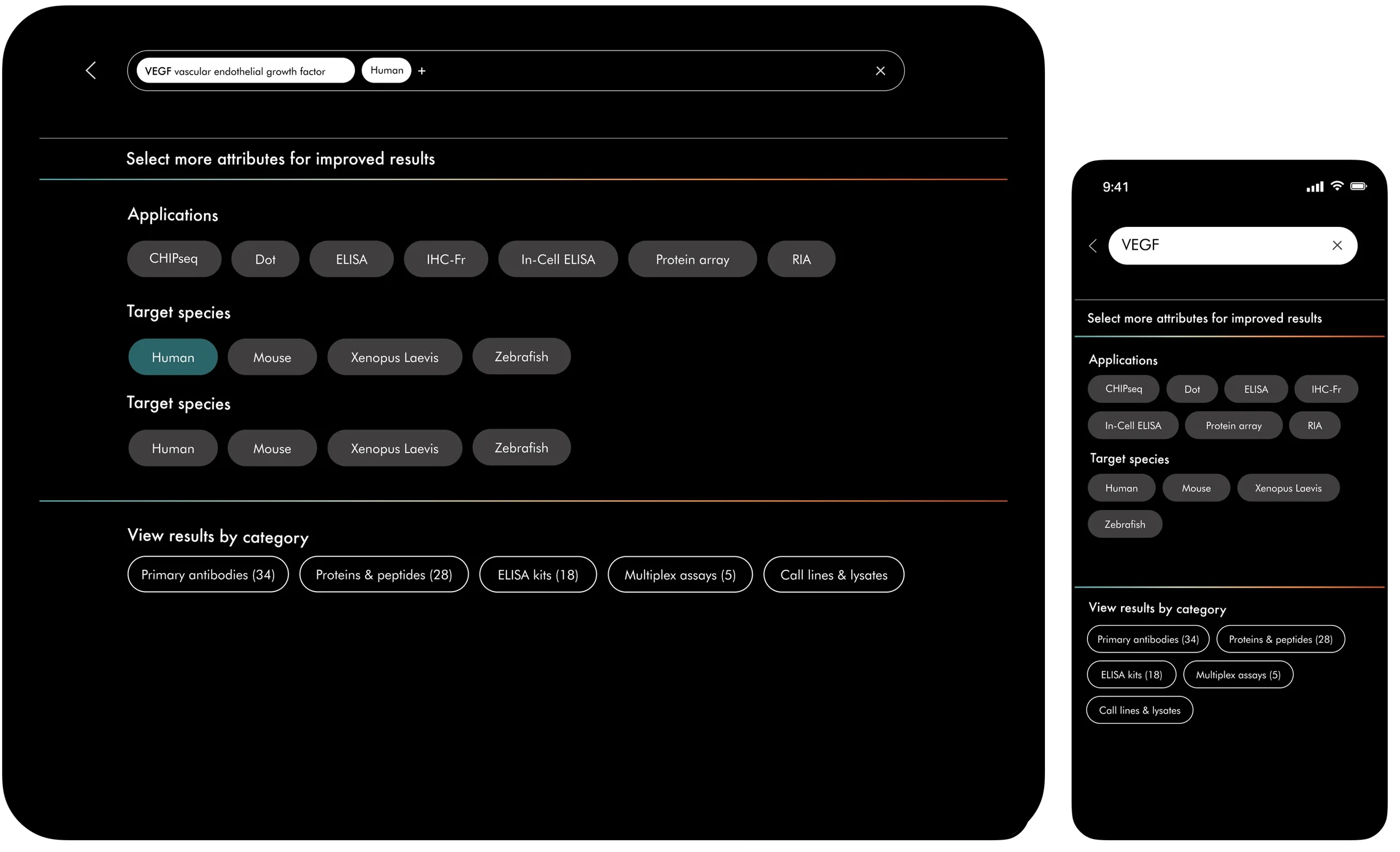
Overview
Time-poor customers and distributors were overwhelmed by large result sets in categories exceeding 30,000 products, with low engagement with attribute filters. Despite entering specific queries, users were presented with broad results, slowing decision-making.
For the business, an inefficient search constrained conversion and increased abandonment and avoidable product replacements under guarantee.
Role
Defined problem using customer feedback and insight data:
Time-poor users overwhelmed by broad, high-volume results
Quantified behaviour: users engaged with ~20 results despite much larger result sets
Defined “positive friction”: slightly more input upfront for quicker downstream decisions
Set UX direction: evidence-led discovery with relevance over volume
Led UX and UXR delivery with Product and Engineering to de-risk rollout and measure impact
Risks
Introducing friction into revenue-critical search journeys
Disrupting high-volume, habitual researcher behaviours
Over-engineering filters that historically showed <4% adoption
Delivering experience change during a broader platform and brand transformation
Scaling globally across B2B2C and distributor contexts without fragmenting journeys
Priorities
Customer to find the right product, first time, in a single session
Reduce result volume while increasing relevance and confidence
Introduce positive friction only where it demonstrably reduced downstream effort
Maintain commercial performance while modernising search behaviour
Anchor UX decisions to measurable revenue and satisfaction outcomes
Direction
Search was repositioned from a passive results engine to an active decision-support system.
The strategy focused on shifting effort earlier in the journey, helping researchers clarify intent before results were returned—rather than relying on complex post-search refinement that users consistently ignored.
Key leadership decisions included:
Prioritising relevance over volume
Treating product views as a primary proxy for revenue
Using behavioural data to challenge long-held assumptions about filters
Designing search as augmentation, not disruption, of existing habits
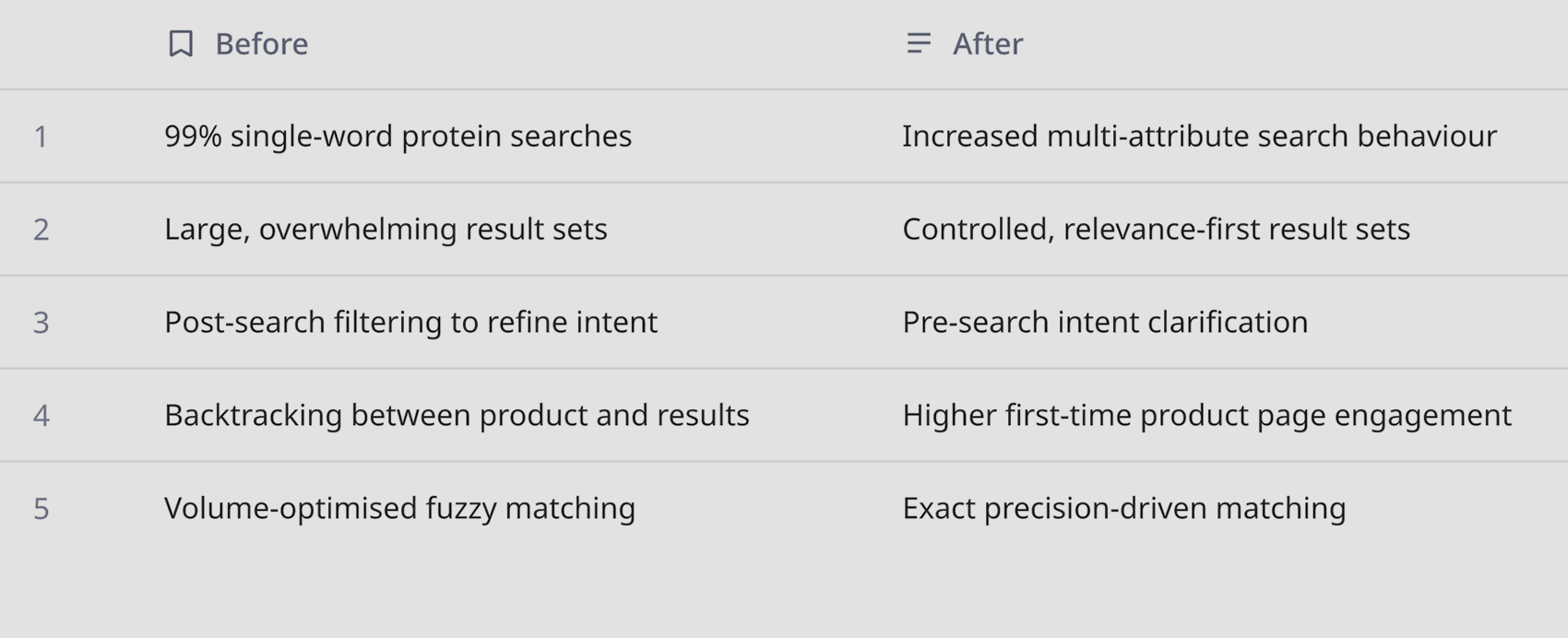
Behavioural Shift Model
Passive search to intent-led discovery.
Search Performance Framework
Core metrics defining performance, revenue protection, and experience impact.
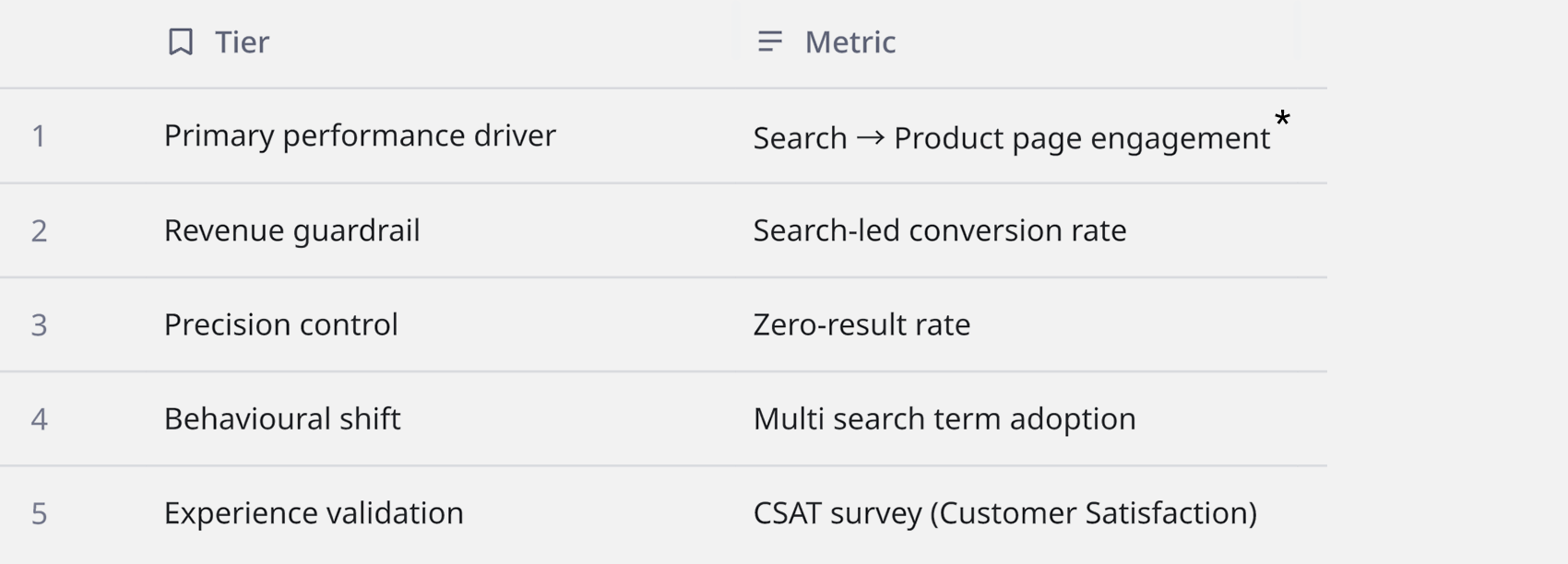
* In a blended online/offline revenue model, improvements in product page engagement correlate strongly with commercial outcomes.
Outcomes
Search journeys evolved from broad, overwhelming result sets to focused, confidence-building exploration.
Researchers were exposed to essential product attributes earlier, enabling faster elimination of irrelevant options and deeper engagement with genuinely suitable products. Search sessions became more deliberate but shorter overall, with reduced backtracking and fewer unnecessary product page visits.
The experience supported both expert users with precise intent and broader searchers without risking revenue-critical pathways.
Impact
Customer
Reduced cognitive load
Faster product discovery
Higher confidence in choices
Business
Strong correlation between Product Description Page (PDP) engagement and revenue signals
Lower operational cost through fewer avoidable returns
Sustained conversion during significant UX and architectural change
Key metrics
Search → PDP engagement: +30% (1.2 → 1.6 pages/session, ≈2.8M additional PDP sessions/year)
Customer satisfaction: Up from 3.2 to 4.3 / 5
Bounce rate: Stable despite added positive friction
Filter usage: Remained <4% validating strategy to reduce dependency
Zero-result searches: Improved by 7% through targeted keyword and matching workstreams
Learnings
Relevance beats optionality, fewer results outperform broader choice
Filters are not a planning tool for time-poor researchers
Small, intentional friction upstream saves significant effort downstream
In a blended on/offline model, product views are a stronger revenue signal than raw conversion alone
Phased rollout is essential when evolving revenue-critical journeys