Insight & Foresight
AI-enhanced interface for interpreting complex data relationships in research

Overview
Researchers working under grant and publication pressure faced fragmented planning workflows across multiple tools and datasets. Complex protein associations and large product catalogues increased planning time and the risk of missed research opportunities.
Risks
Reducing planning time without disrupting existing high-converting journeys
For the business, limited insight into emerging research trends constrained proactive portfolio investment.
Introducing new digital capability also carried risk to revenue-critical search journeys.
Priorities
Reducing planning time without disrupting existing high-converting journeys
Introducing AI as an augmentation, not a replacement
Prioritising speed, stability, and adoption over feature depth
De-risking impact through phased exploration and clear success metrics
Direction
Reducing planning time without disrupting existing high-converting journeys
Limited visibility into emerging research relationships constrained proactive portfolio investment
Introducing new digital capability carried risk to revenue-critical search flows
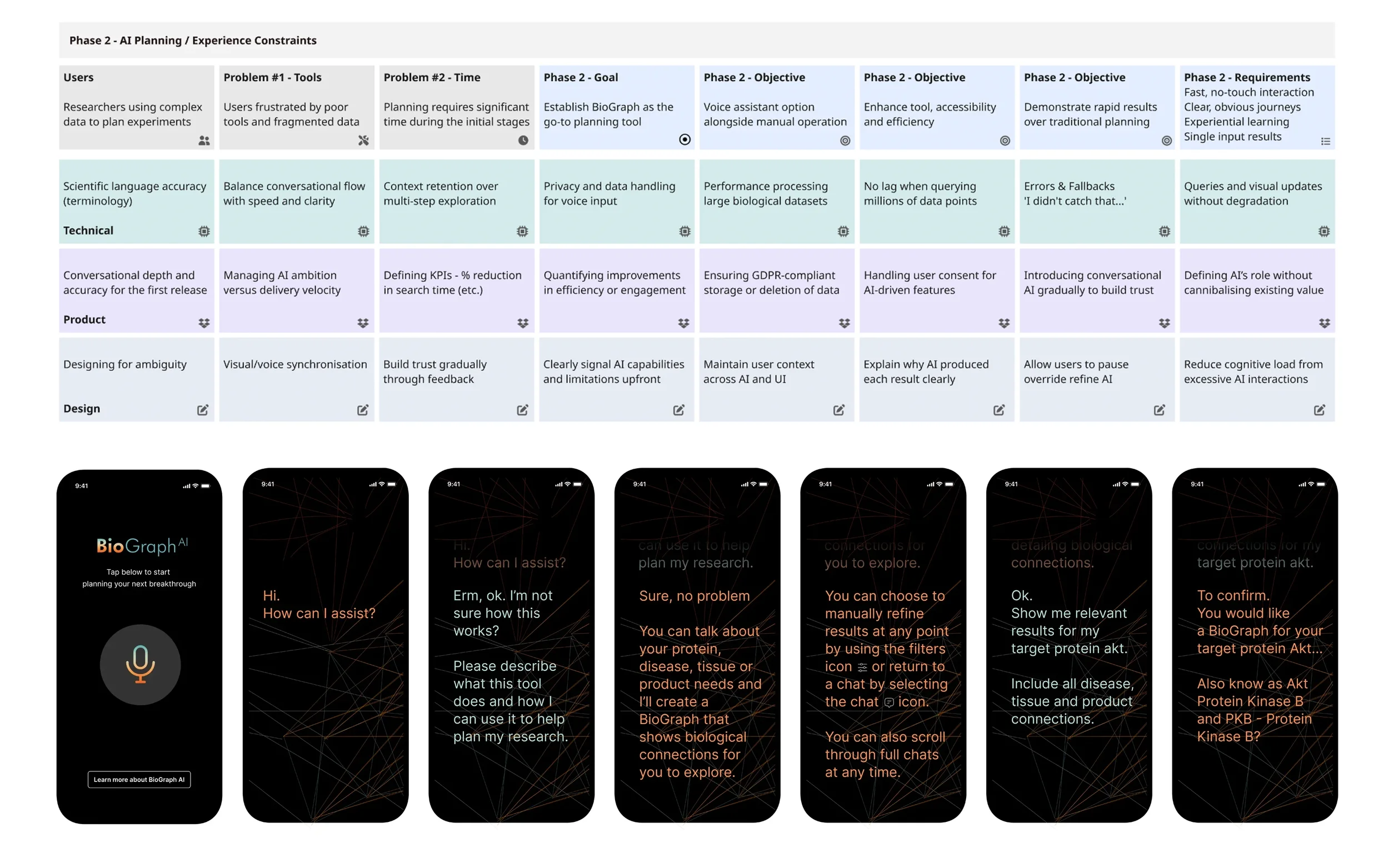
Designed using the BiOTA 3.0 design system to ensure brand and interaction consistency
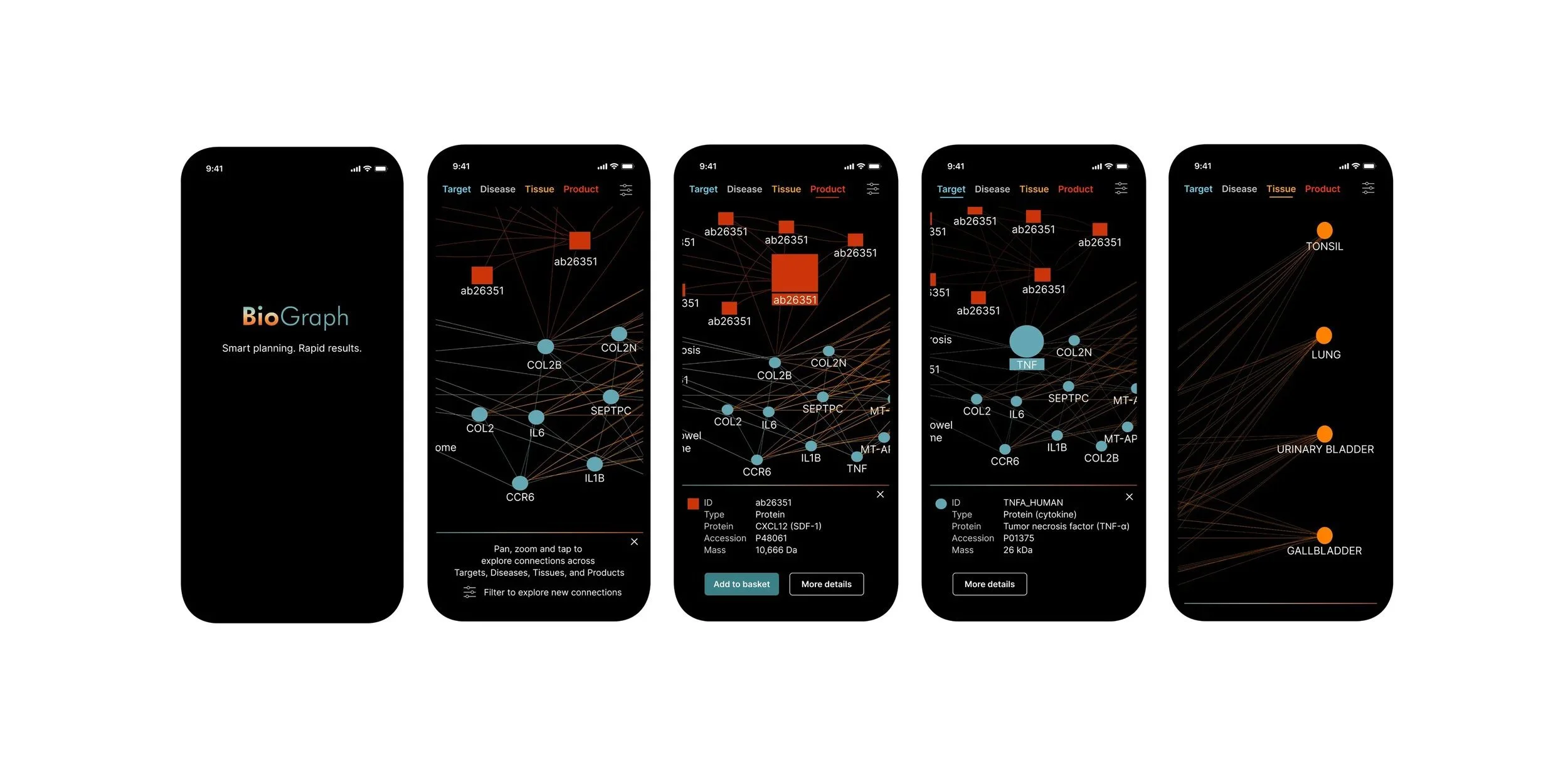
Full-screen, mobile-optimised layout to simplify navigation within complex relational data
Visual complexity reduced from early proof of concept to avoid unnecessary cognitive noise
Outcomes
Researchers were able to explore pathways and product associations previously hidden across disparate sources. Planning shifted from manual, multi-tool workflows to a single exploratory experience, improving confidence and breadth of consideration.
Impact
Demonstrated feasibility of AI-driven planning within existing channels
Established a foundation for scalable digital services alongside physical products
Improved collaboration across Product, UX and Data Science
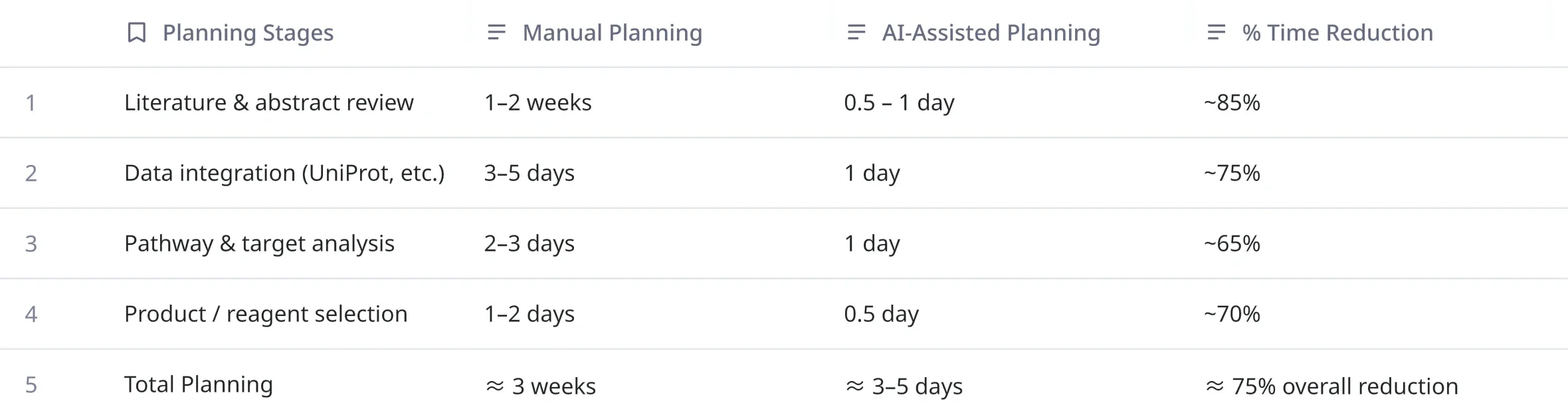
~75% reduction in average planning time (≈3 weeks → 3–5 days)
Learnings
Predictive planning must enhance trusted search behaviours
Novel interaction models require careful onboarding and terminology clarity
Phased rollout is critical to adoption and risk management