Biota design system
Evolving design system across rebrands and enterprise transformation
Context
The organisation underwent three brand evolutions — including its first major rebrand in 18 years — alongside large-scale digital transformation.
When I joined, BiOTA 1.0 existed in name but not in discipline.
Digital interfaces were characterised by:
Inconsistent button styles and interaction behaviours
Divergent brand application across regions
Duplicated components built independently
Informal governance
Limited shared interaction standards
Design quality was constrained not by capability, but by system immaturity.
Each subsequent rebrand became an opportunity to structurally evolve the system rather than apply another surface refresh.
Role
As Head of UX & Product Design, I led a multidisciplinary team embedded across nine product squads spanning search, content, commerce and CRM.
I joined prior to Generation 2 and inherited a fragmented system. Recognising that UX consistency could not scale without structural change, I intentionally shifted focus toward design operations and system maturity.
Over time, my role evolved from stabilising inconsistency to architecting and governing a platform-level design system.
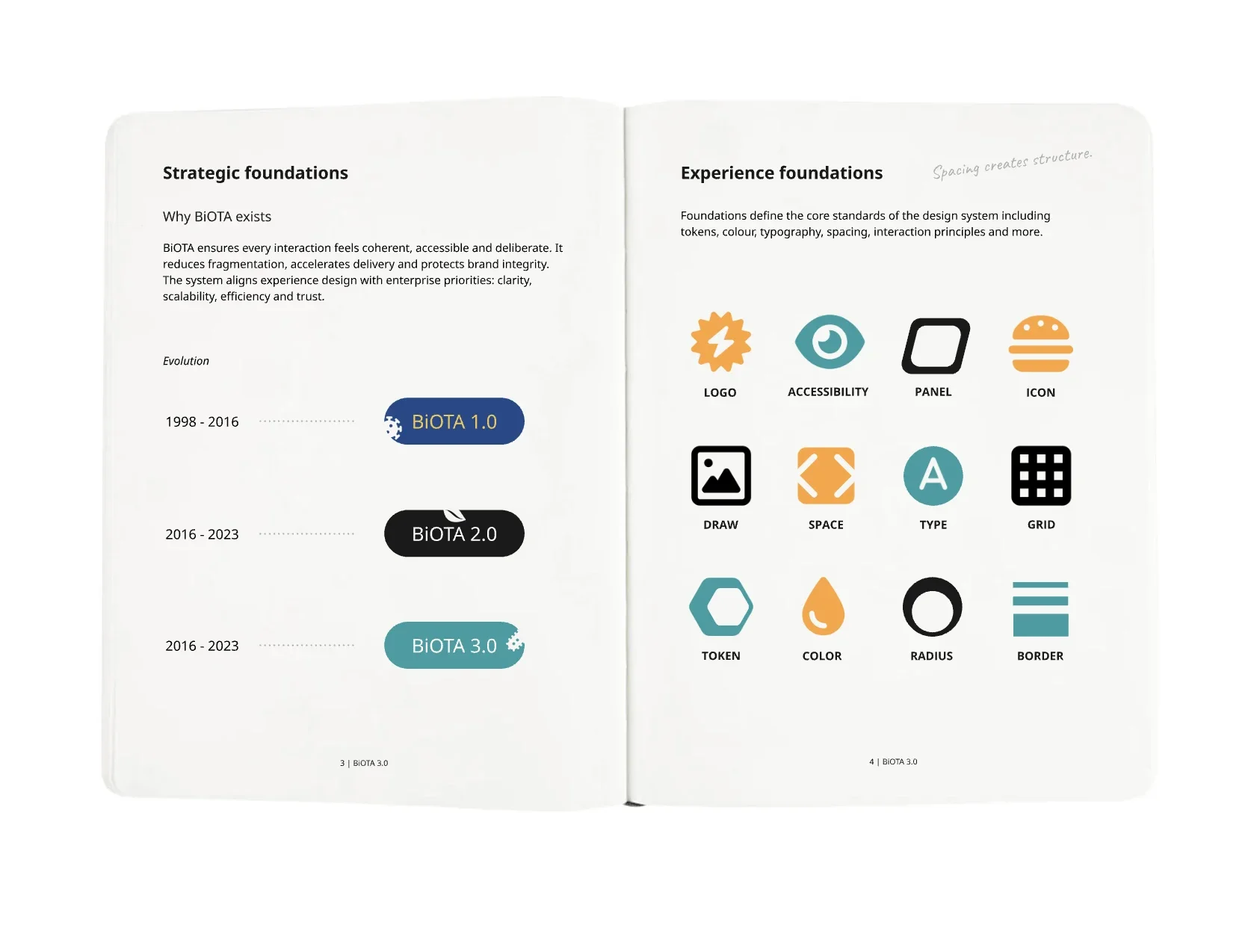
Generation 1 — Fragmented Foundations
(Pre-existing)
BiOTA 1.0 was guideline-led but inconsistently applied.
Buttons varied in style and behaviour
Interaction patterns were duplicated
Components were rebuilt across squads
Brand application lacked cohesion
The system lacked enforcement, documentation maturity and architectural alignment.
It provided a starting point — not a scalable foundation.
Generation 2 — Systemisation
(Rebrand 2)
As product complexity increased and multiple squads delivered in parallel, structural change became essential.
BiOTA 2.0 introduced:
A formalised component library
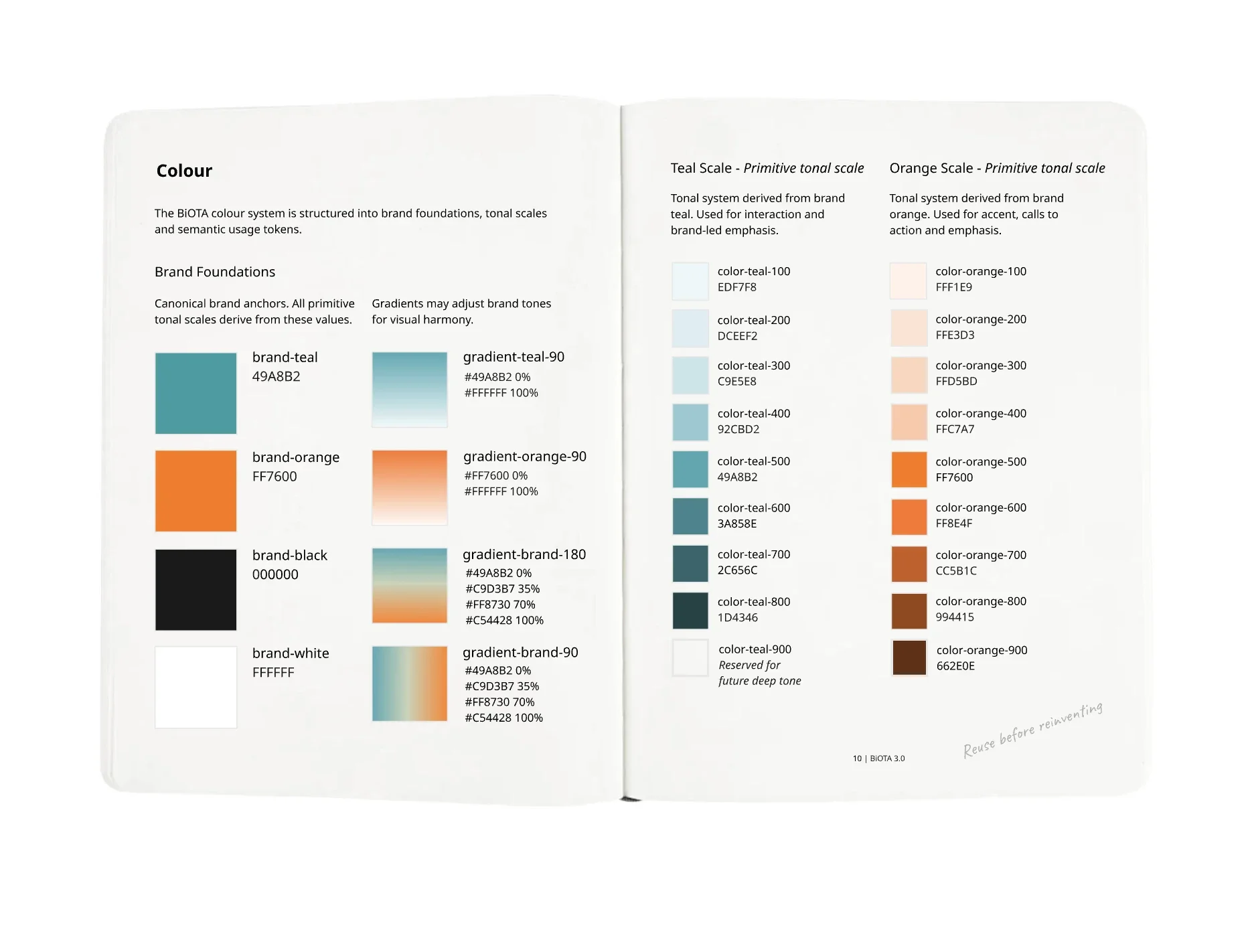
Defined tonal scales and foundational tokens
Improved accessibility standards
Clearer documentation and reuse
Early governance cadence
This phase reduced duplication and rework, creating predictable handoffs between design and engineering. BiOTA shifted from loosely applied guidelines to an operational system.
Generation 3 — Platform Integration
(Rebrand 3 + Enterprise Transformation)
The third evolution aligned with major architectural modernisation:
React front-end rebuild
Headless CMS adoption
Structured product data integration
CRM consolidation
Expansion to nine global product squads
BiOTA 3.0 became infrastructure.
We implemented:
A clear primitive → semantic hierarchy
Alignment between system definitions and React components
Version-controlled documentation
Contribution workflows
Global governance forums
The system enabled safe rebrand rollout, minimal UI unpredictability and reduced component-level rework during transformation.
Impact
Increased consistency across digital streams
Reduced duplicated components and redesign cycles
Improved cross-squad delivery predictability
Enabled rebrands without structural disruption
Embedded governance into product decision-making
BiOTA transitioned from fragmented guidelines to a behavioural and architectural foundation.
Reflection
The evolution of BiOTA was not a visual journey, it was a structural one.
From inherited inconsistency to modular scalability and finally platform integration, each generation represented a maturity shift in governance, architecture and digital team culture
By prioritising system stability before scaling innovation, we created the interaction foundation that allowed nine squads to move safely at speed while protecting customer experience.